What.Three.Words: lunging.surfer.crawled

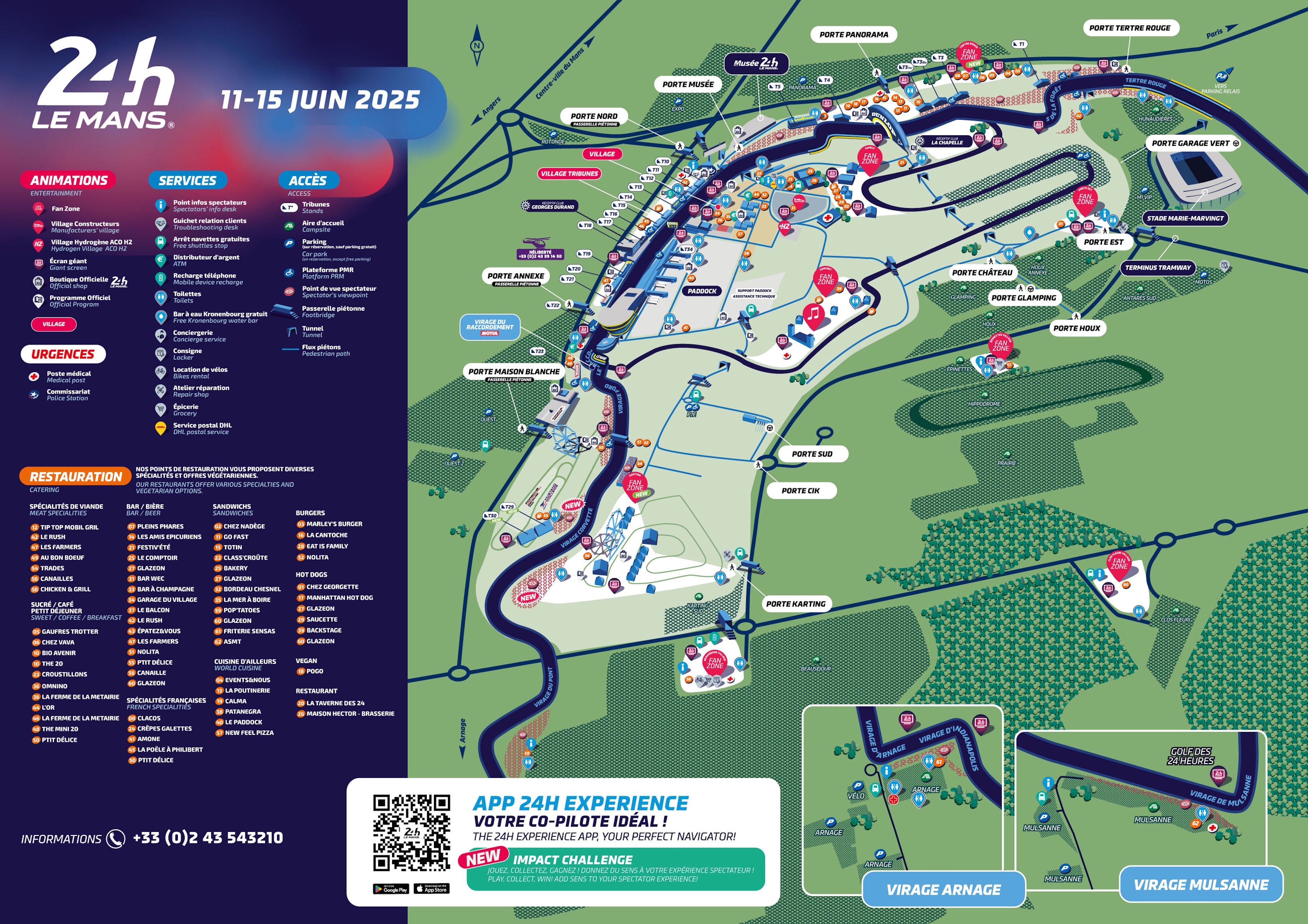
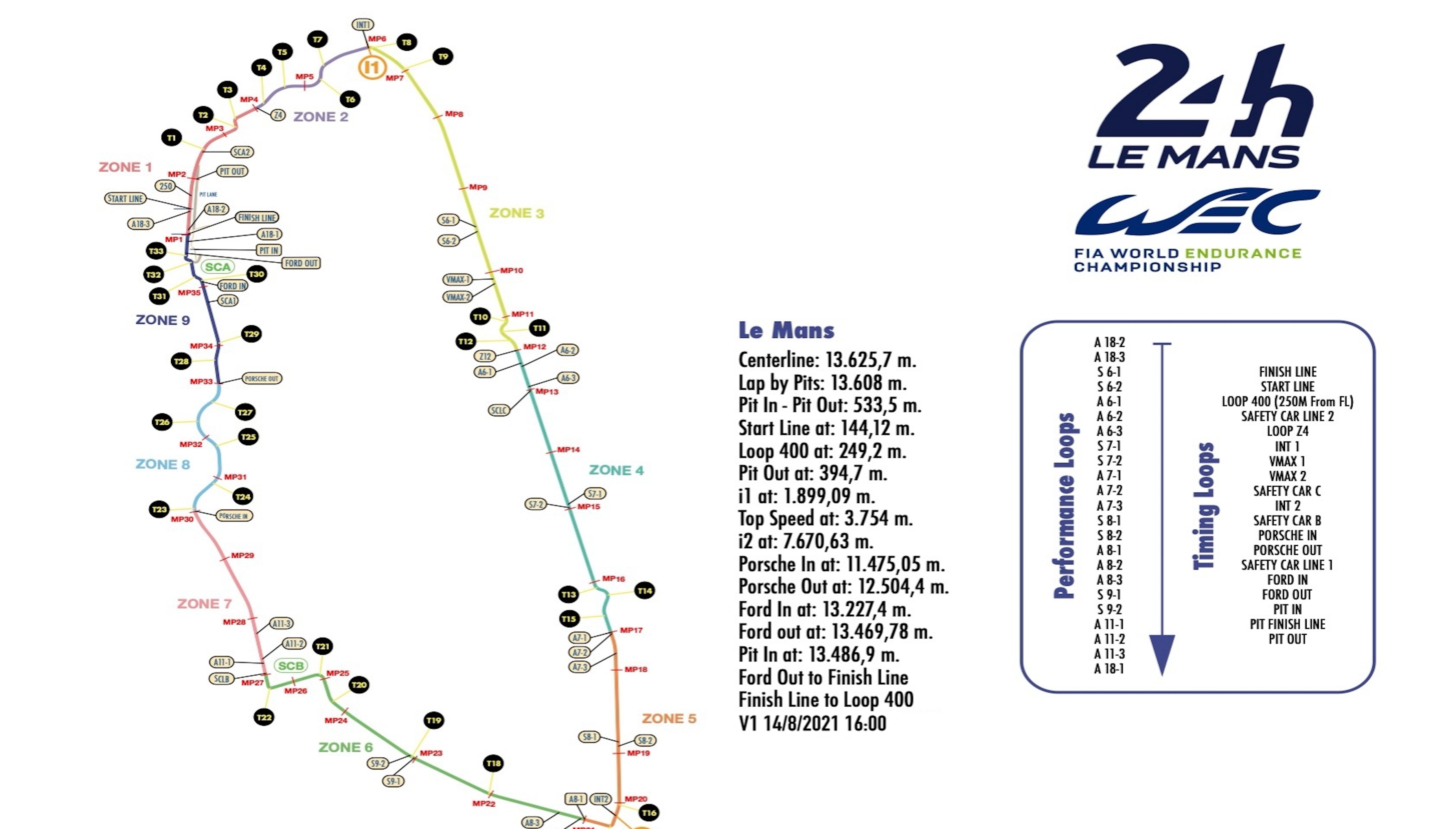
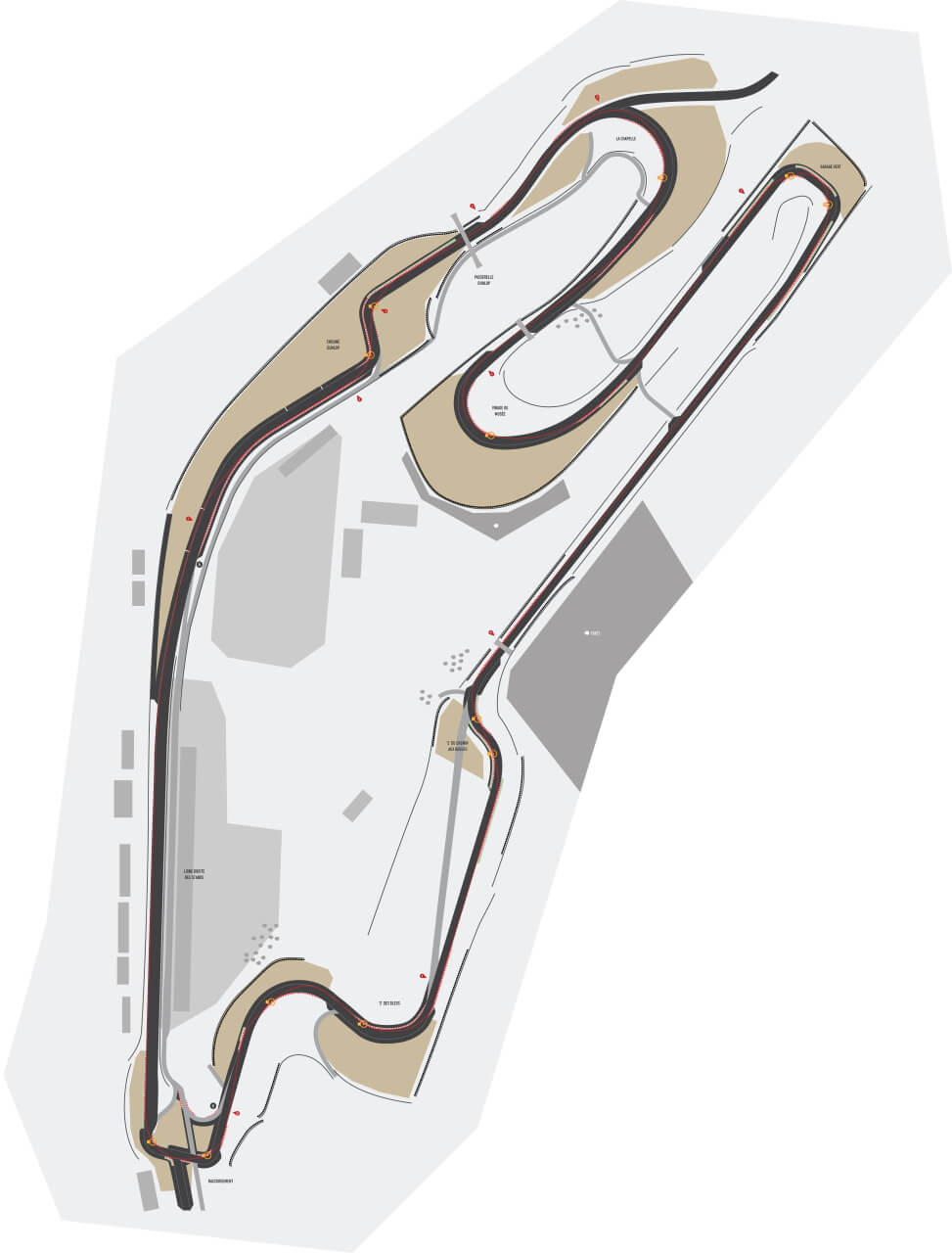
The 24 Hours of Le Mans is held on the Circuit de la Sarthe, named after the department where Le Mans is located. The circuit features a combination of permanent track and public roads that are temporarily closed during the race. Since its inception in 1923, the track has undergone extensive modifications, primarily for safety reasons, and now measures 13.629 km (or 8.1 miles) in length. The Bugatti circuit provides the pit lane facilities and includes the first corner, marked by the iconic Dunlop Bridge.
The circuit originally entered the town of Le Mans but was later shortened to enhance spectator safety. This adjustment resulted in the creation of the Dunlop Curve and Tertre Rouge corners before the track rejoined the old circuit at the Mulsanne.
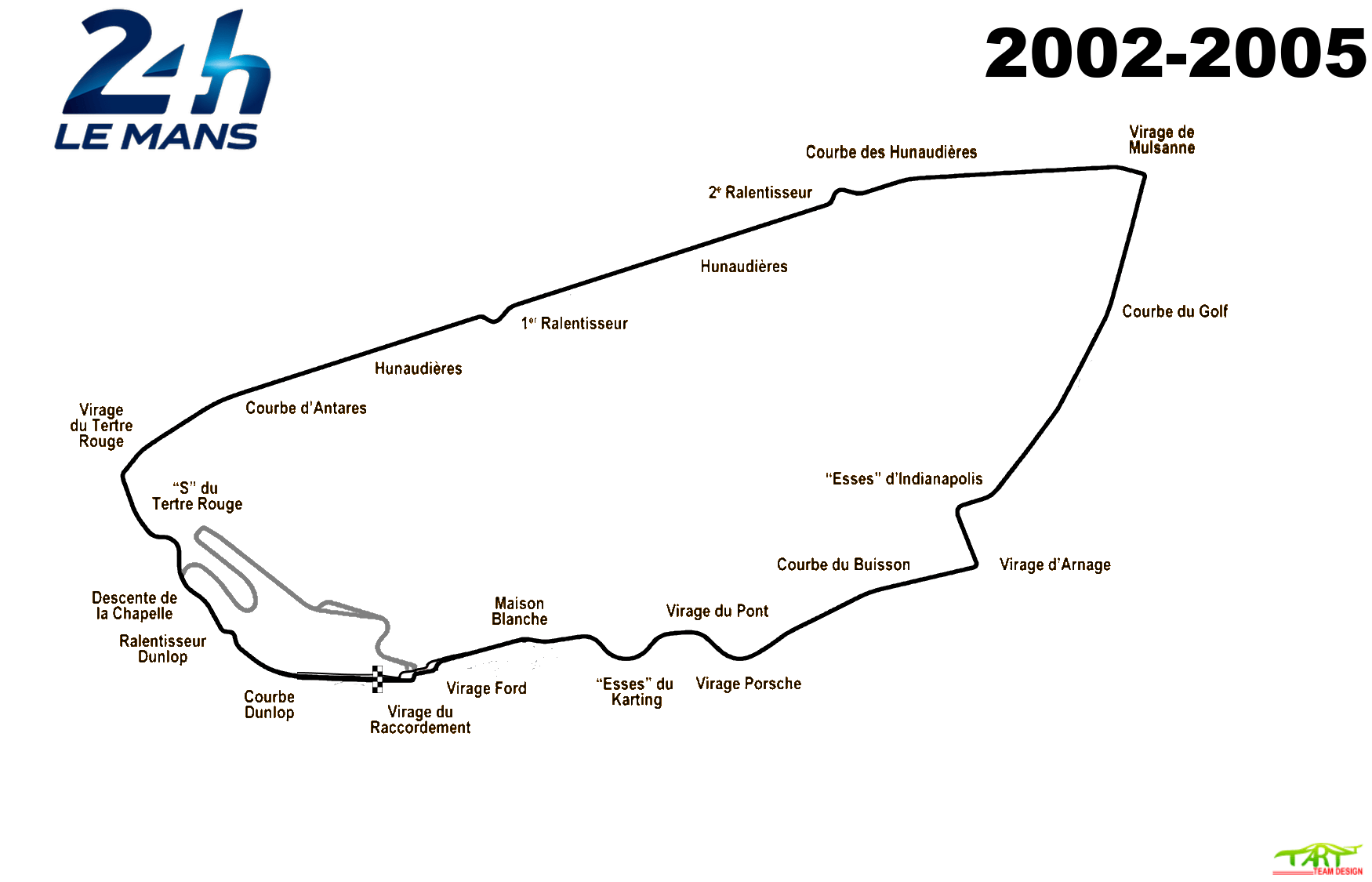
The track has undergone numerous changes over the years. The Circuit des 24 Heures is perhaps best known for the iconic Mulsanne Straight, which is part of the RN138, locally referred to as Ligne Droite des Hunaudières. This section now features two PlayStation chicanes. You can still catch a glimpse of the cars as they race past at the Hunaudières.
The inclusion of the chicanes was a safety measure implemented after Roger Dorchy's WM P88-Peugeot recorded a speed of 405 km/h (or 252 mph) during the 1988 race.
The circuit remains on public roads through the gently banked Indianapolis and Arnage corners before it diverges for the Porsche Curves, which bypass the old Maison Blanche section. It then ultimately returns to the Bugatti circuit at the Ford Chicane.
The public sections of the track differ significantly from the permanent circuit, particularly when compared to the Bugatti Circuit, which is located within the Circuit de la Sarthe. Due to heavy traffic in the area, the public roads are not as smooth or well-maintained. They also provide less grip because of the absence of soft-tyre rubber deposited by racing cars, although this primarily affects only the first few laps of the race. The roads are closed just a few hours before practice sessions and the race, reopening almost immediately after the race concludes. Each year, workers must set up and take down safety barriers for the public sections.
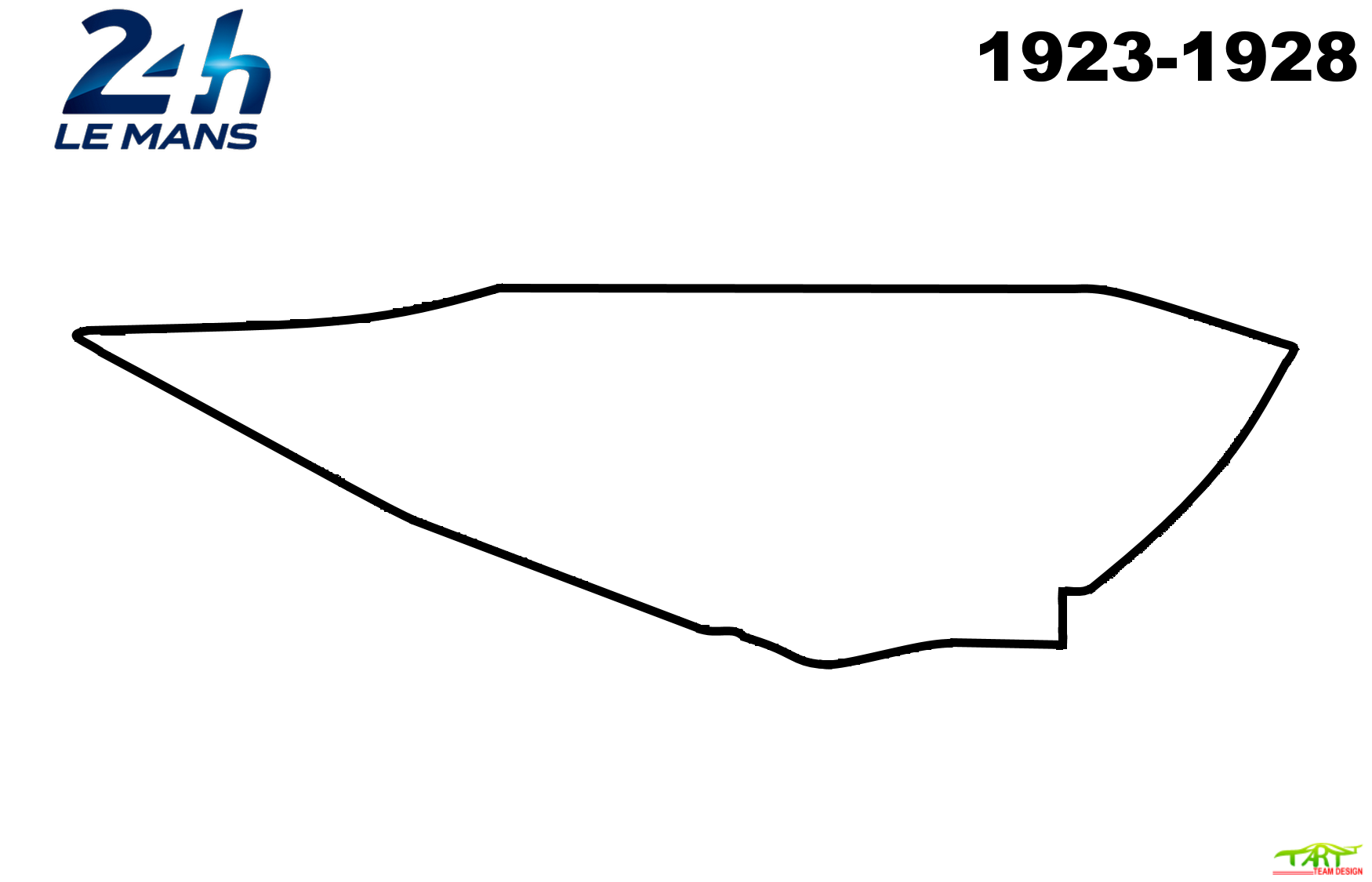
The initial track layout for the 24 Hour race was vastly different from that used in the very first French Grand Prix in 1906. The circuit was made up entirely of public roads located south of the city and extended into the suburbs as far as the Pontlieue hairpin. The distance record was set by the winners in 1928, covering 2,669.27 km at an average speed of 111.219 km/h. The fastest lap during the 1928 race was achieved by Henry Birkin in his 4.4-litre Bentley, clocking a time of 8:07 with an average speed of 127.604 km/h.
The track was shortened for safety reasons to circumvent the rapidly expanding suburbs of the town. A new link road, built at the expense of the Automobile Club de l'Ouest (ACO), was named Rue du Circuit. The distance record was set by the winners in 1931, covering 3,017.65 km at an average speed of 125.735 km/h. The fastest lap was established during the 1930 race by Henry Birkin in his 4.4-litre Bentley, with a time of 6:48, achieving an average speed of 144.362 km/h.
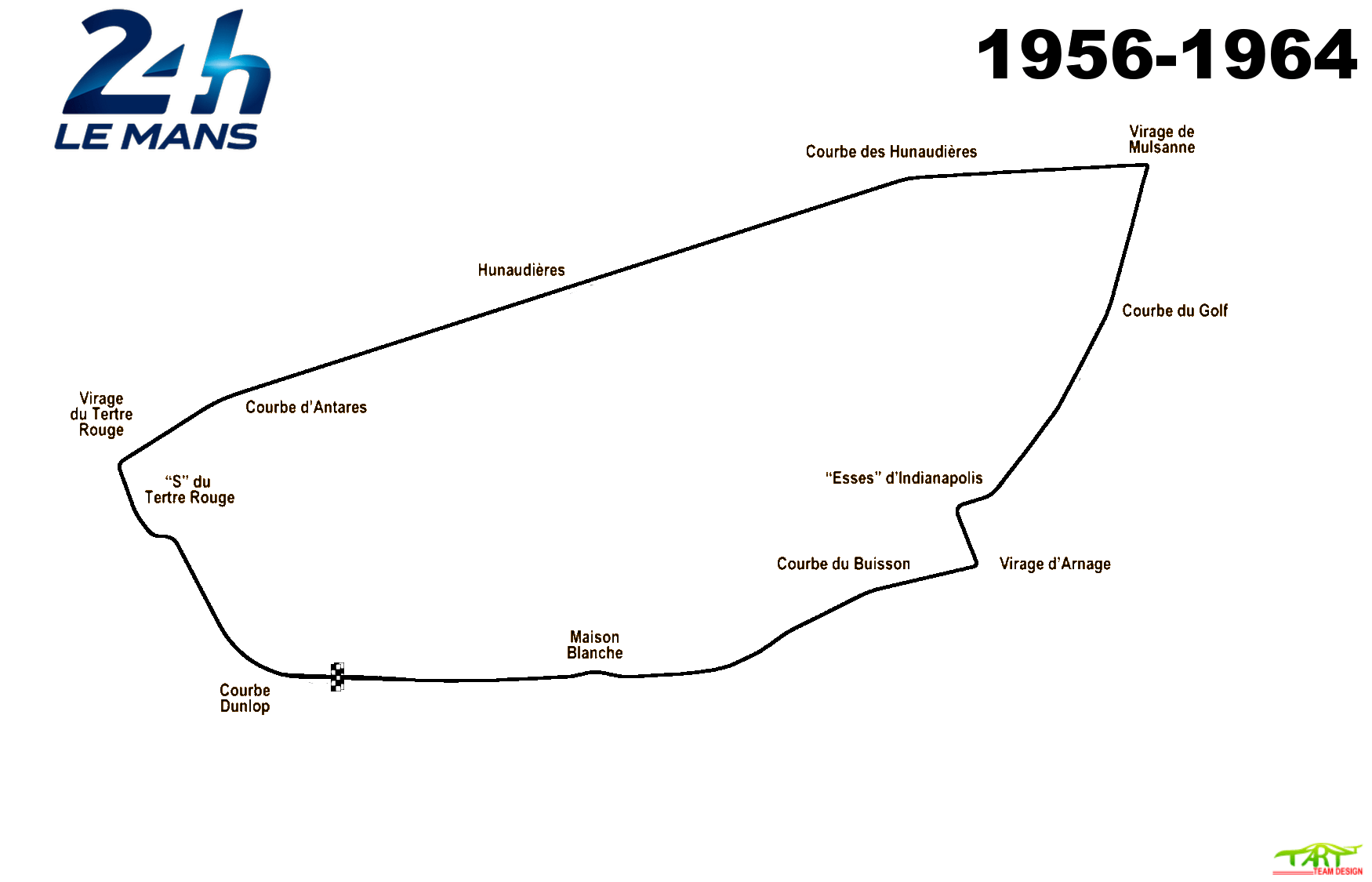
The track was further shortened with the addition of a new purpose-built section that connected the pits straight to the Tertre Rouge corner on the Le Mans - Tours road. This section also featured the construction of the iconic Dunlop Bridge. The distance record was set by the winners in 1955, covering 4,135.38 km at an average speed of 172.308 km/h. The fastest lap during the 1955 race was achieved by Mike Hawthorn in the winning Jaguar D-type, clocking a time of 4:06.60 with an average speed of 196.963 km/h.
In the aftermath of the 1955 accident, the entire pit area was reconstructed. Modifications to the track width and pit lane resulted in changes to the Dunlop Curve, ultimately shortening the track by 31 meters. The distance record was set by the winners in 1967, covering 5,232.90 km at an average speed of 218.038 km/h. The fastest lap during the 1967 race was achieved by Denny Hulme and Mario Andretti, both driving Ford Mk IVs, with a time of 3:23.60, achieving an average speed of 238.014 km/h.
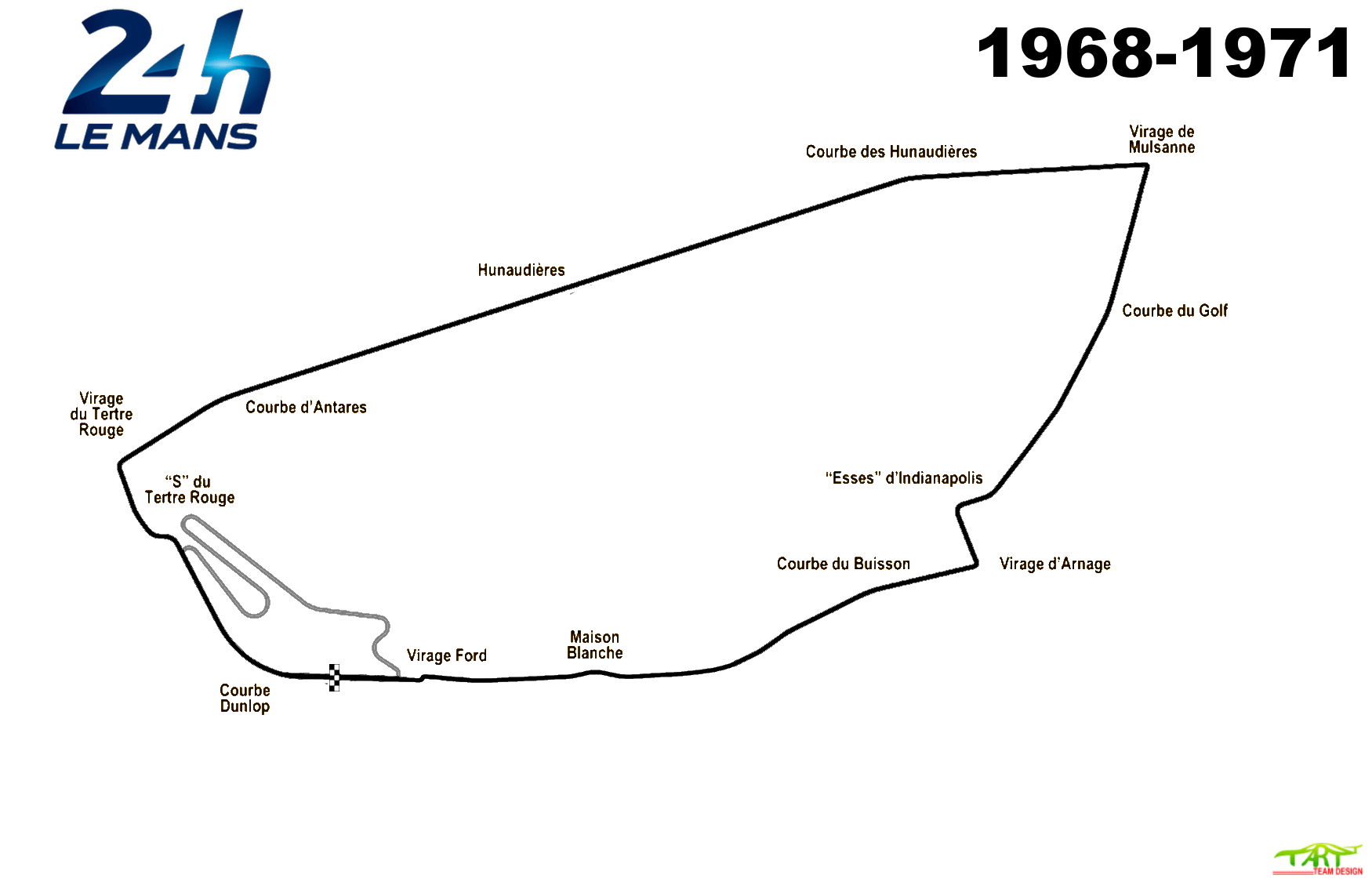
To reduce speeds near the pit area, a chicane was added just before the pit entrance. This chicane, known as the Ford Chicane, involved a slight redirection of the track from Maison Blanche. The distance record was set by the winners in 1971, covering 5,335.31 km at an average speed of 222.304 km/h. The fastest lap during the 1971 race was achieved by Jackie Oliver in the number 18 Gulf Porsche 917LH, with a time of 3:18.40, resulting in an average speed of 244.387 km/h.
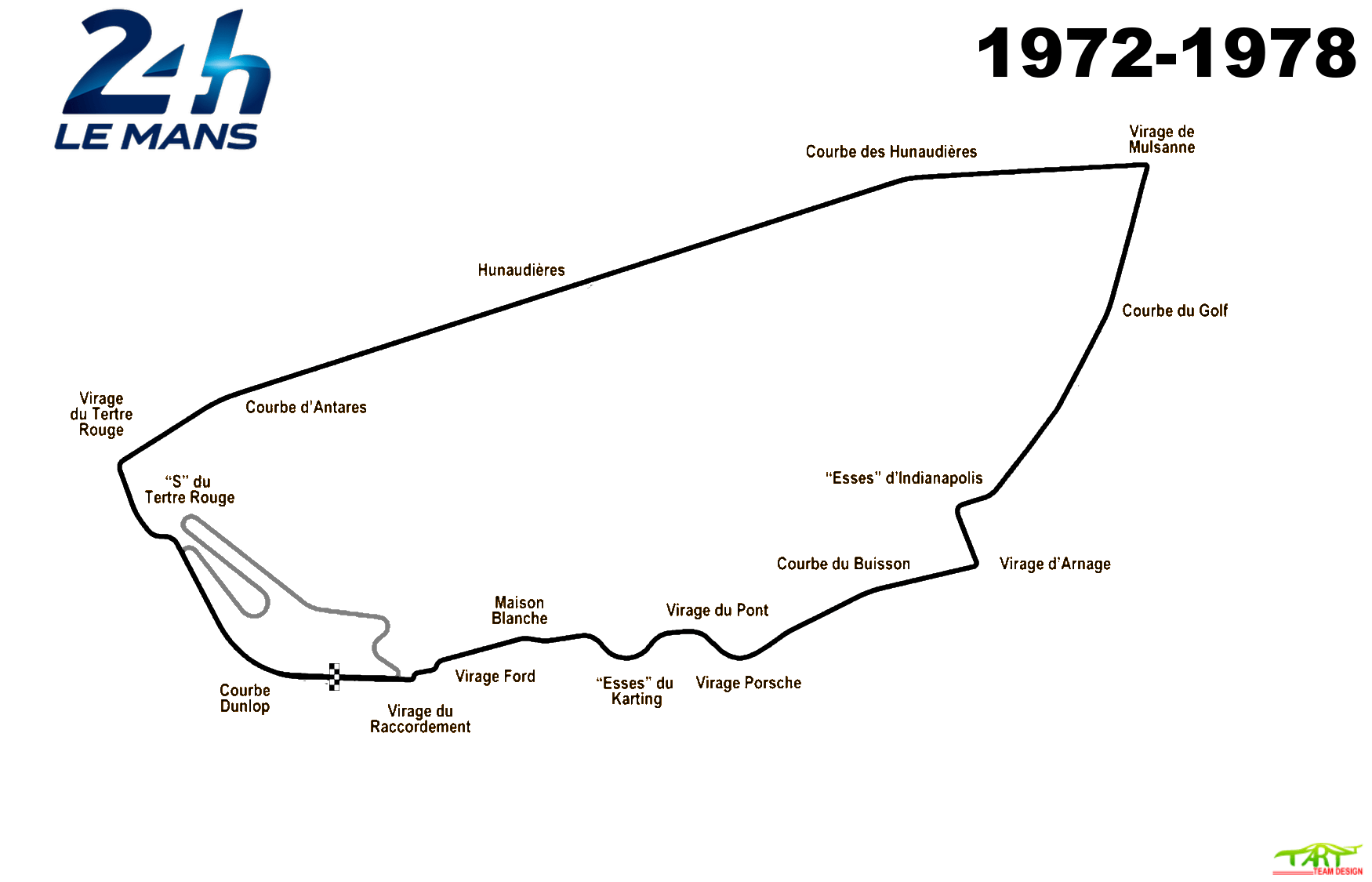
A new section was constructed starting from the Arnage to Maison Blanche stretch, completely bypassing Maison Blanche. This new segment connected the existing track to another slow corner at the Ford Chicane. The distance record was set by the winners in 1978, covering 5,044.53 km at an average speed of 210.188 km/h. The fastest lap during the 1978 race was achieved by Jean-Pierre Jabouille in the A443 Renault, with a time of 3:34.20, resulting in an average speed of 229.244 km/h.
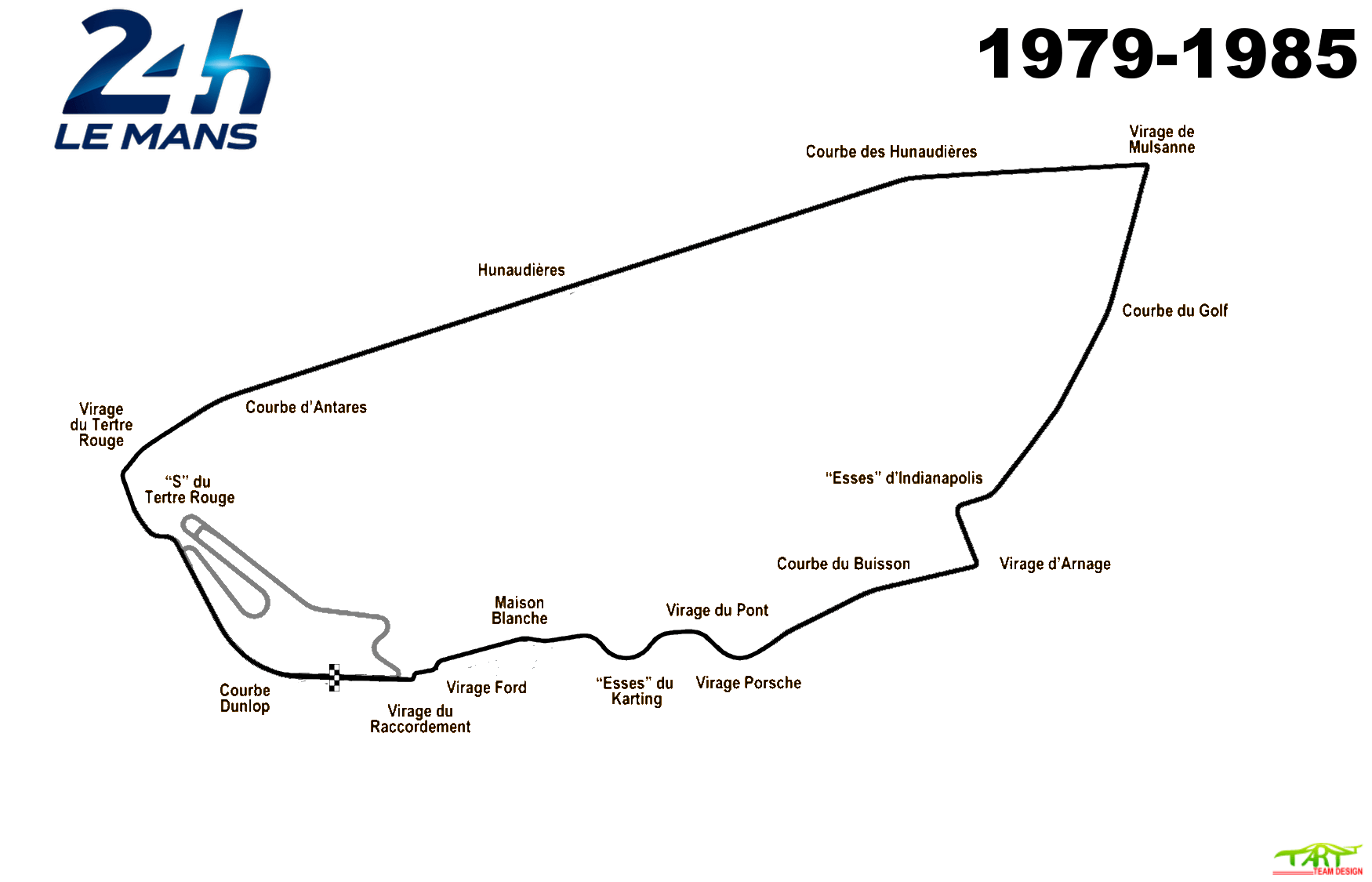
The construction of a new public road necessitated the reprofiling of the Tertre Rouge corner, transforming it from a right-angled turn into a faster, more complex double apex. Additionally, the second Dunlop Bridge was removed. The distance record was set by the winners in 1985, covering 5,088.51 km at an average speed of 212.021 km/h. The fastest lap during the 1985 race was achieved by Jacky Ickx in the factory Rothmans Porsche 962, clocking in at 3:25.10, which corresponds to an average speed of 239.169 km/h.
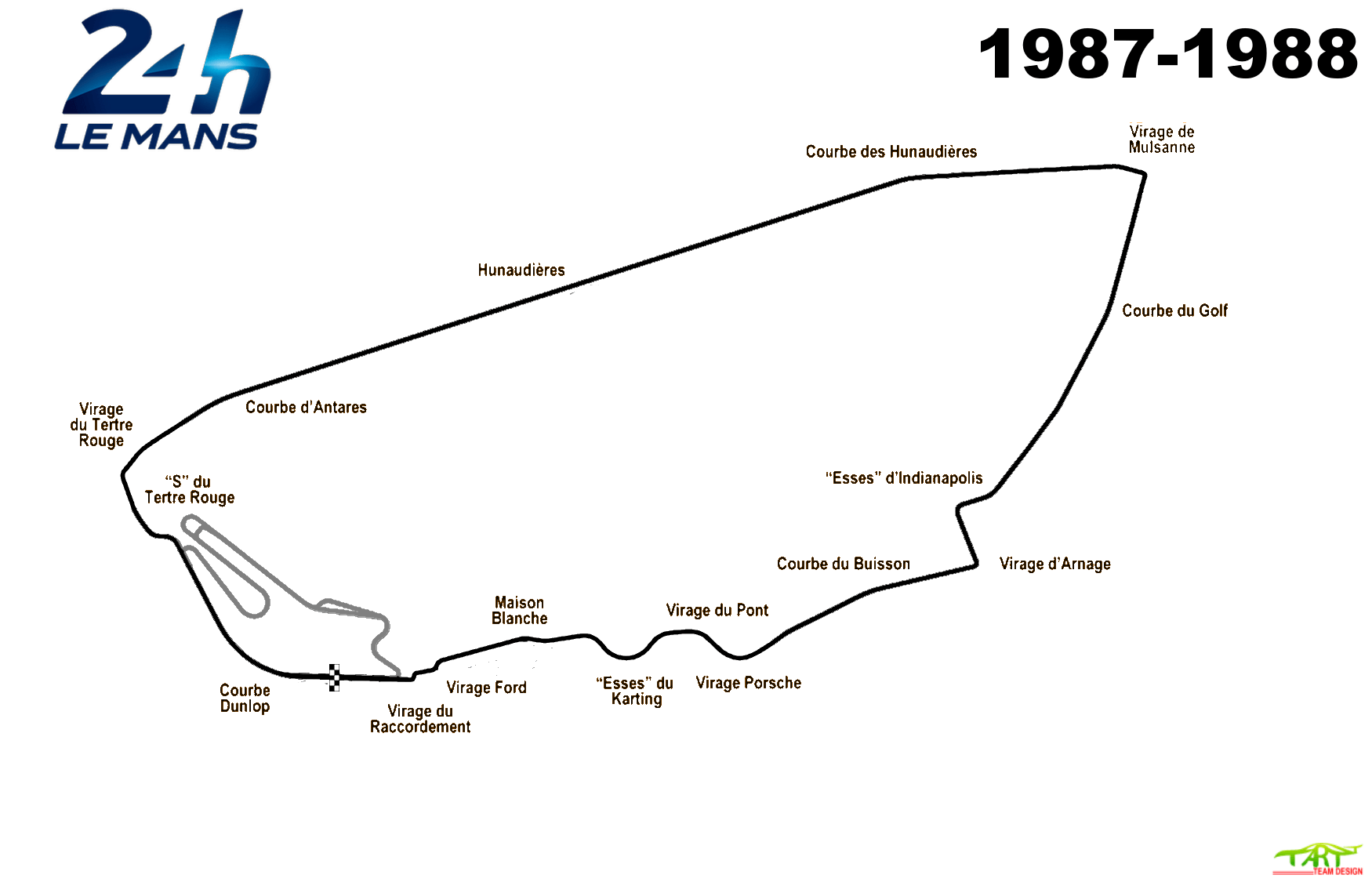
The Mulsanne corner was altered to accommodate a new roundabout aimed at reducing accidents at the junction. The updated layout included a right kink just before the original corner, creating a slightly offset new turn. The distance record set by the winners in 1986 was 4,972.73 km, achieving an average speed of 207.197 km/h. The fastest lap during the 1986 race was recorded by the number 7 Joest Porsche 956, driven by Ludwig, Barilla, and ‘Winter’, with a time of 3:23.3, corresponding to an average speed of 239.551 km/h.
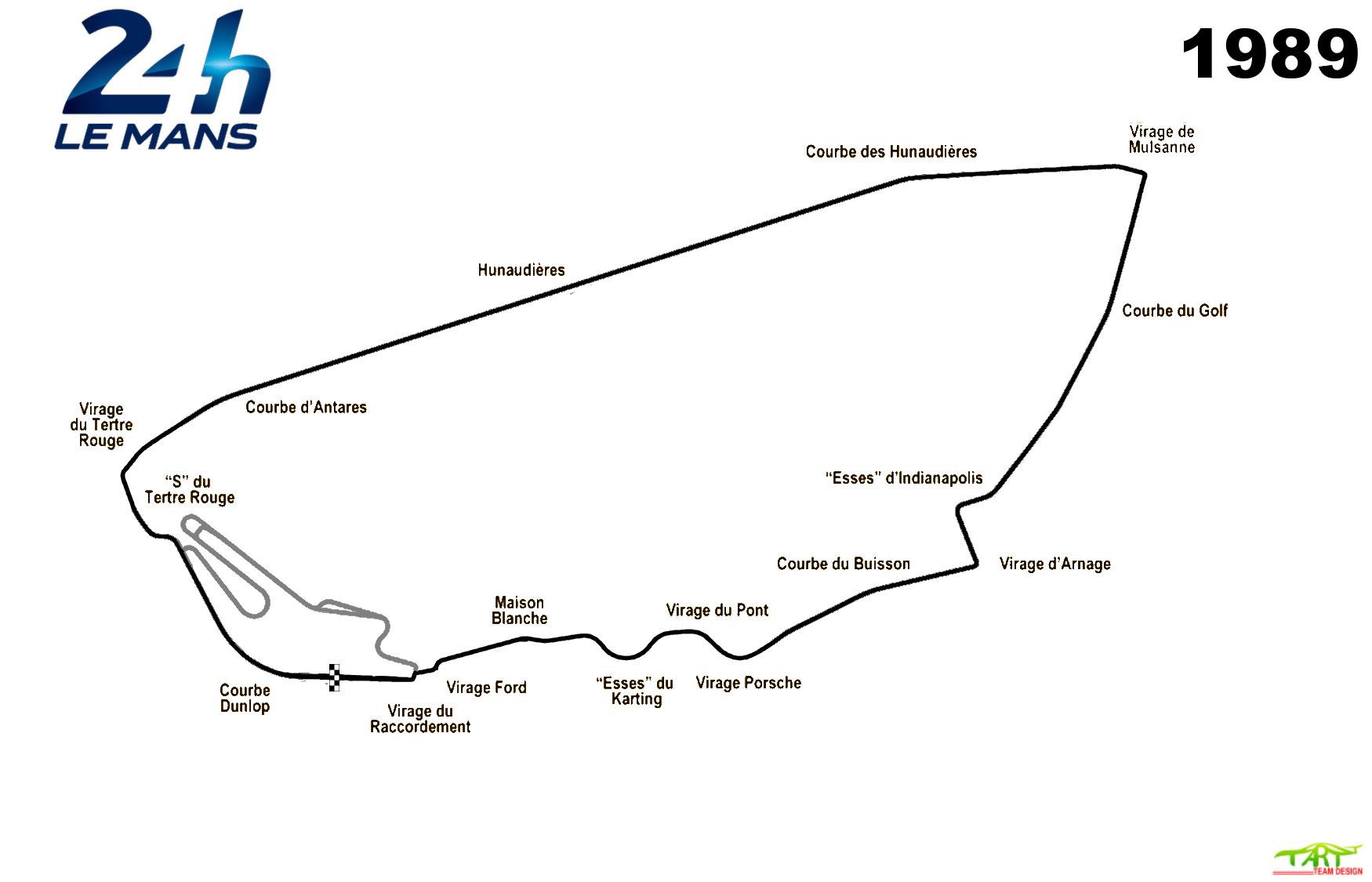
Due to the excessive speeds reached by motorcycles approaching the Dunlop bridge during their races, the Dunlop curve was modified, and a chicane was introduced before the bridge to significantly reduce speeds. The distance record set by the winners in 1988 was 5,332.79 km, with an average speed of 221.622 km/h. The fastest lap during the 1989 race was achieved by the number 4 TWR Silk Cut Jaguar driven by Alain Ferté, clocking in at 3:21.27, which corresponds to an average speed of 242.093 km/h.
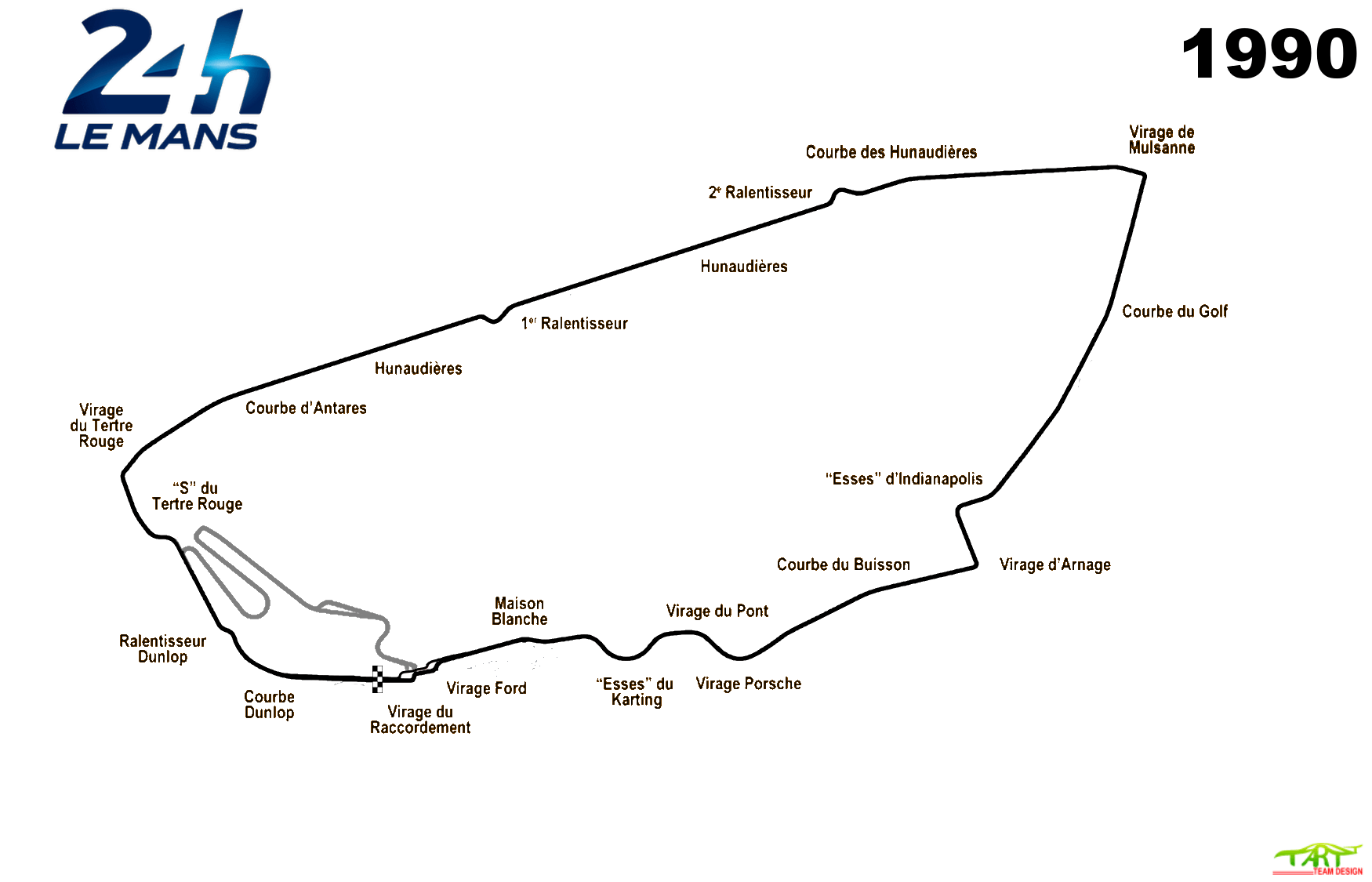
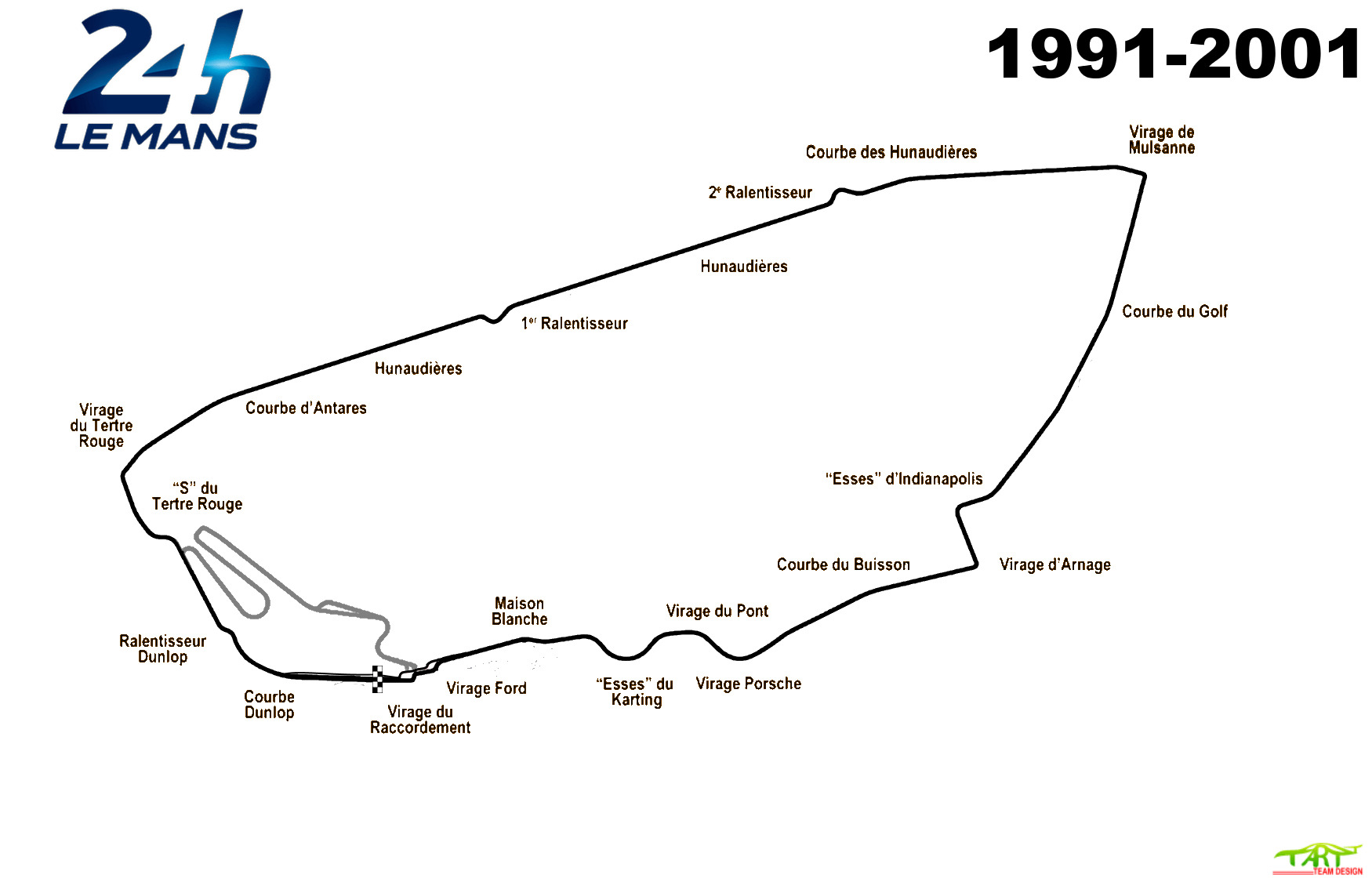
The Mulsanne straight was divided into three sections with the introduction of two mirror-image chicanes to meet an FIA directive on the maximum allowable length of straights. A new pit lane entrance was also created in preparation for the new pit complex in 1991. The distance record set by the winners in 1993 was 5,100.00 km, with an average speed of 213.358 km/h. The fastest lap during the 1993 race was completed by Eddie Irvine, driving the number 36 Toyota TS010, with a time of 3:27.47, achieving an average speed of 235.986 km/h.
A slight reconfiguration of the Dunlop chicane was implemented, moving the turning point further from the bridge to create a larger runoff area and gravel trap, primarily for the safety of motorcycle racers. The distance record set by the winners in 2000 was 5,007.988 km, with an average speed of 208.666 km/h. The fastest lap during the 1999 race was achieved by Ukyo Katayama in the No. 3 Toyota GT-One, with a time of 3:35.032, resulting in an average speed of 227.771 km/h. In 2001, the profile of the "hump" at the end of the Mulsanne Straight was lowered in accordance with FIA recommendations following the Mercedes accidents in 1999, though this change did not alter the overall layout.
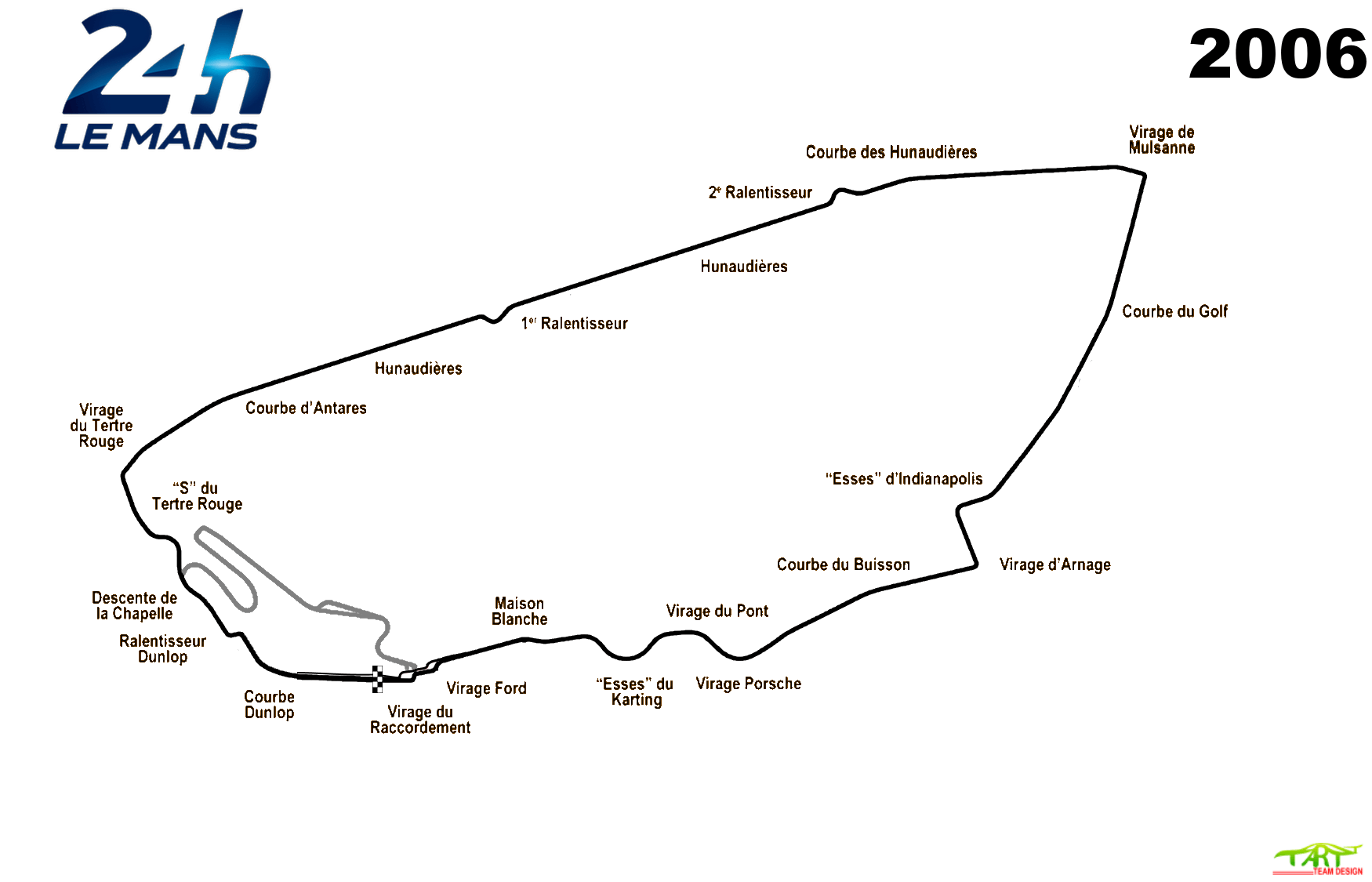
A significant modification was made between the Dunlop Bridge and the Esses, replacing the straight descent with a series of sweeping curves. This change aimed to improve the entry into the shorter Bugatti circuit. The distance record set by the winners in 2006 was 5,187.00 km, with an average speed of 215.409 km/h. The fastest lap during the 2006 race was achieved by the No. 7 Audi R10 driven by Capello, Kristensen, and McNish, completing it in 3:31.211, resulting in an average speed of 230.182 km/h.
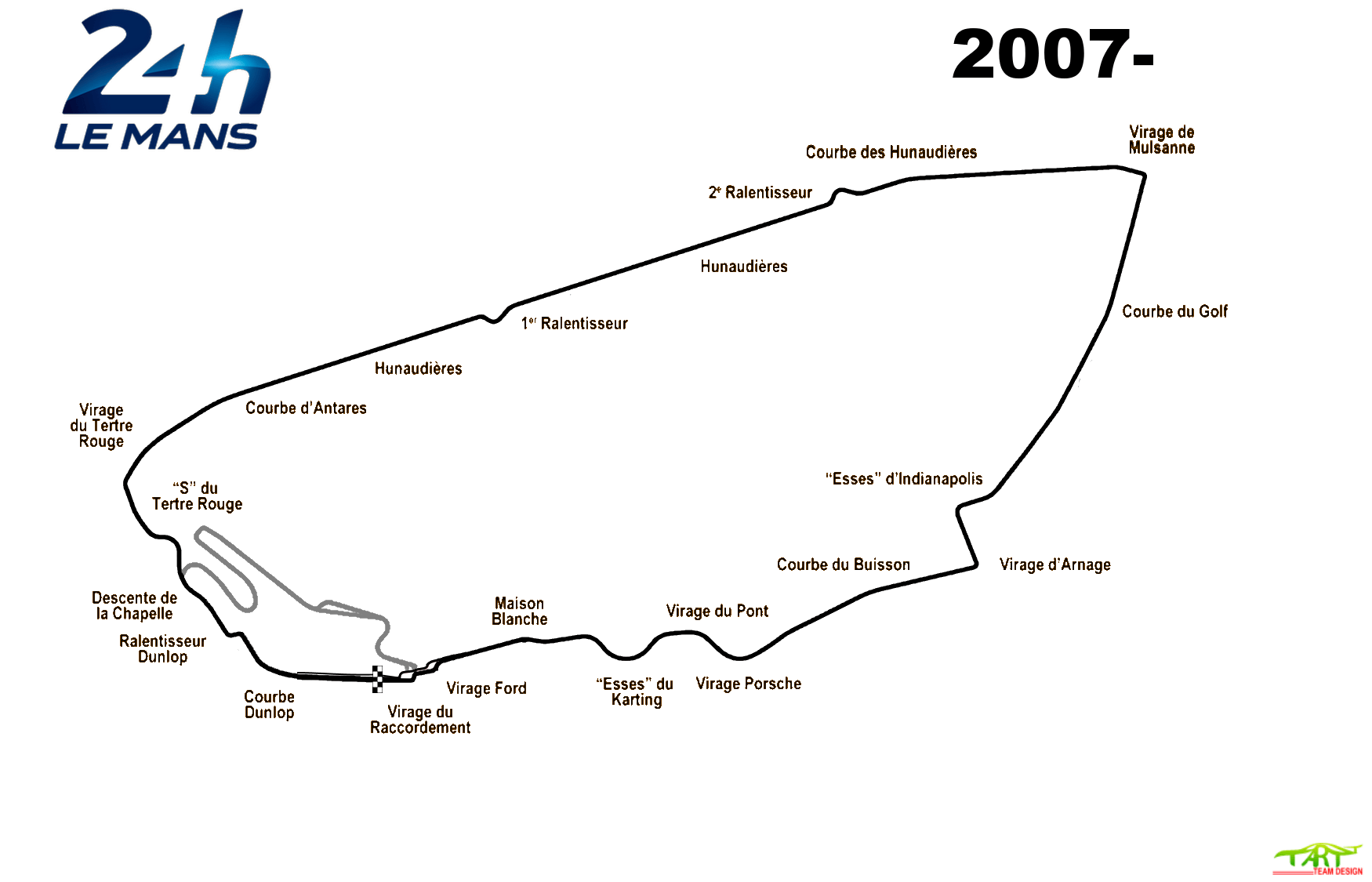
The Tertre Rouge corner was reprofiled to create a smoother, longer curve leading into the start of the Mulsanne Straight. In 2012, a runoff area was added at Arnage corner, followed by a new protection system introduced at the Porsche Curves in 2016. Additionally, modifications were made to the road and banking at the Indianapolis and Arnage Corners in 2016. The distance record set by the winners in 2010 was 5,410.713 km, with an average speed of 225.228 km/h. The fastest lap during the 2015 race was recorded by the No. 9 Audi R18 E-Tron Quattro driven by Andre Lotterer, achieving a time of 3:17.475.
Further InformationWikipedia
Racing Circuit Info














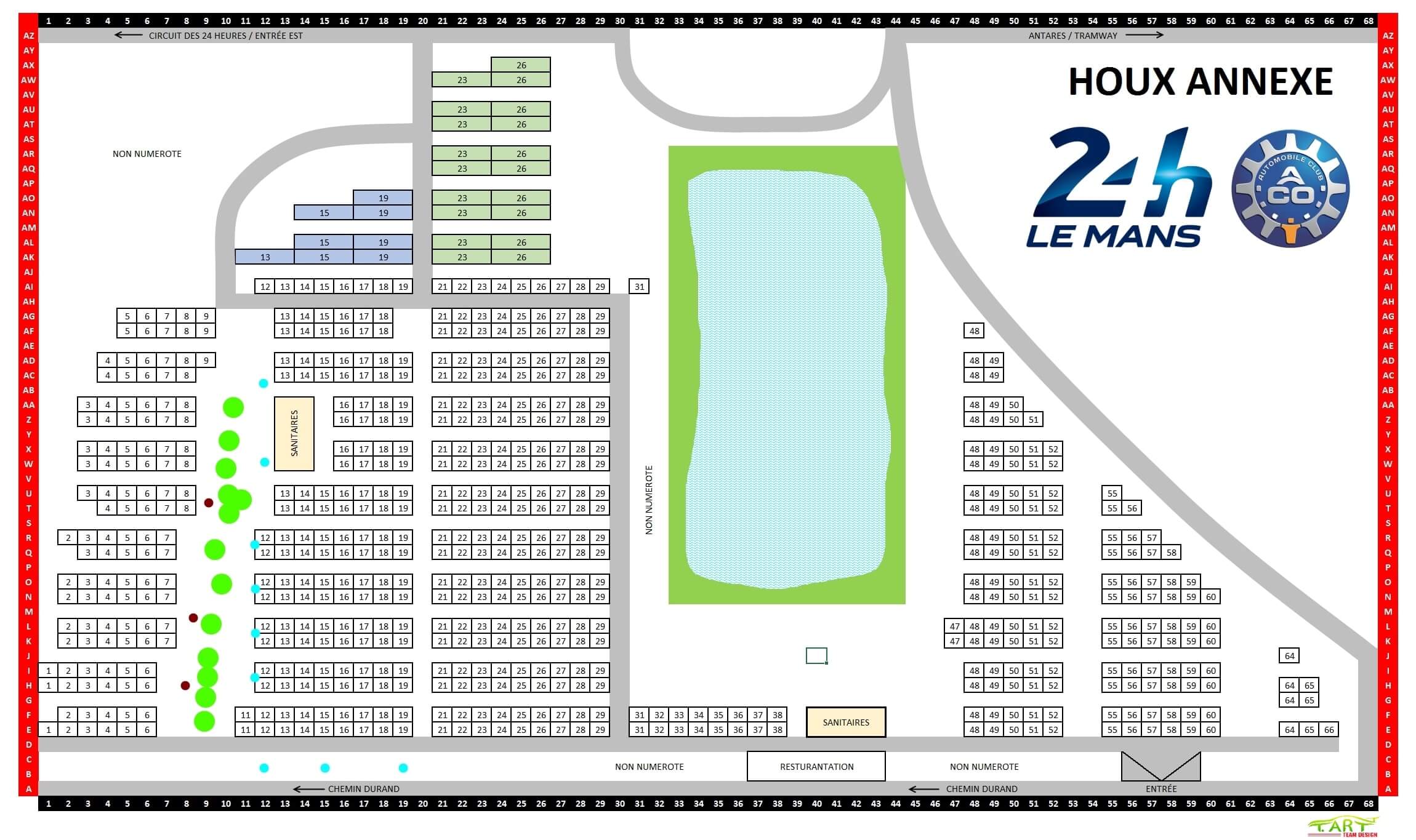
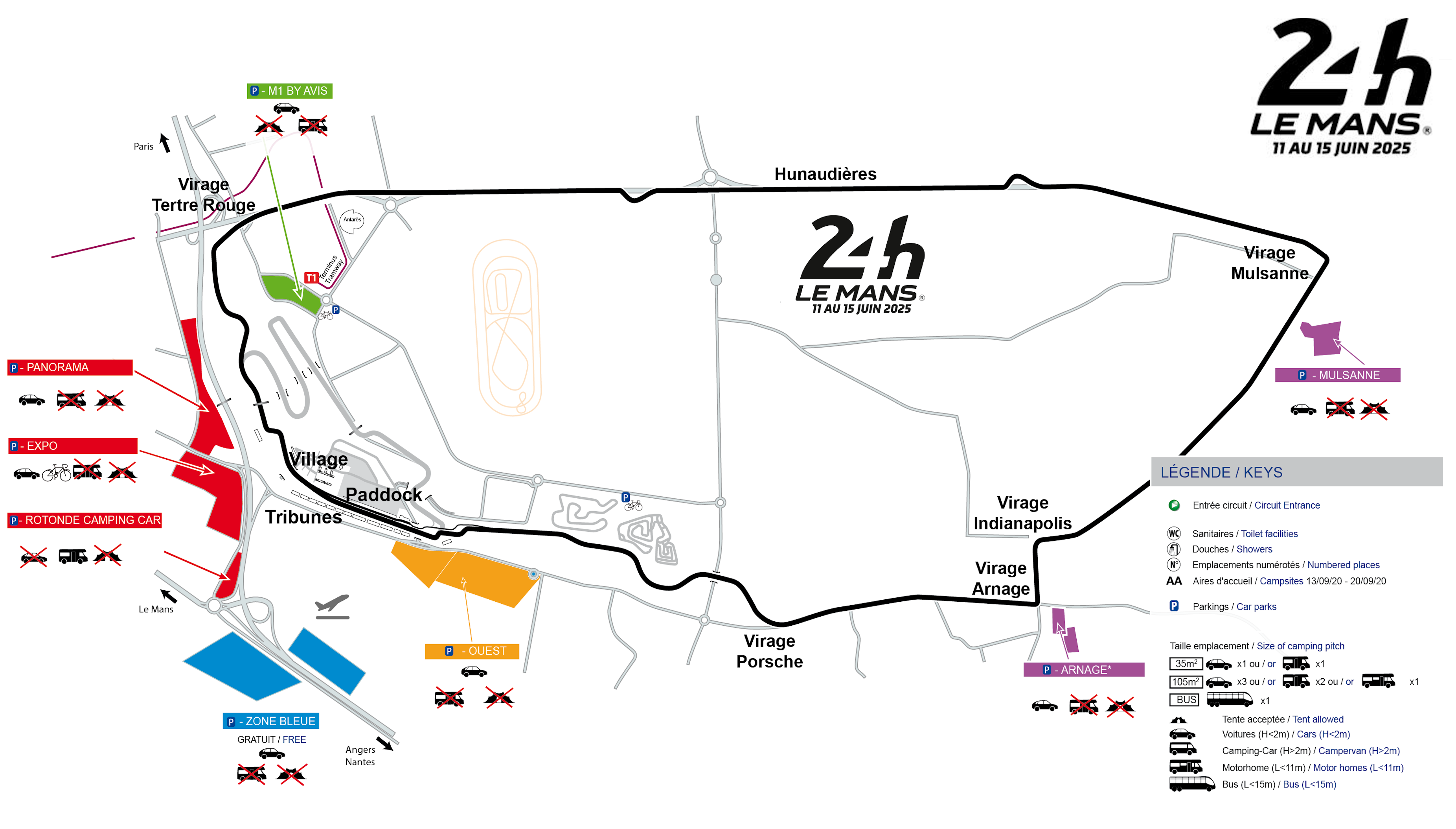
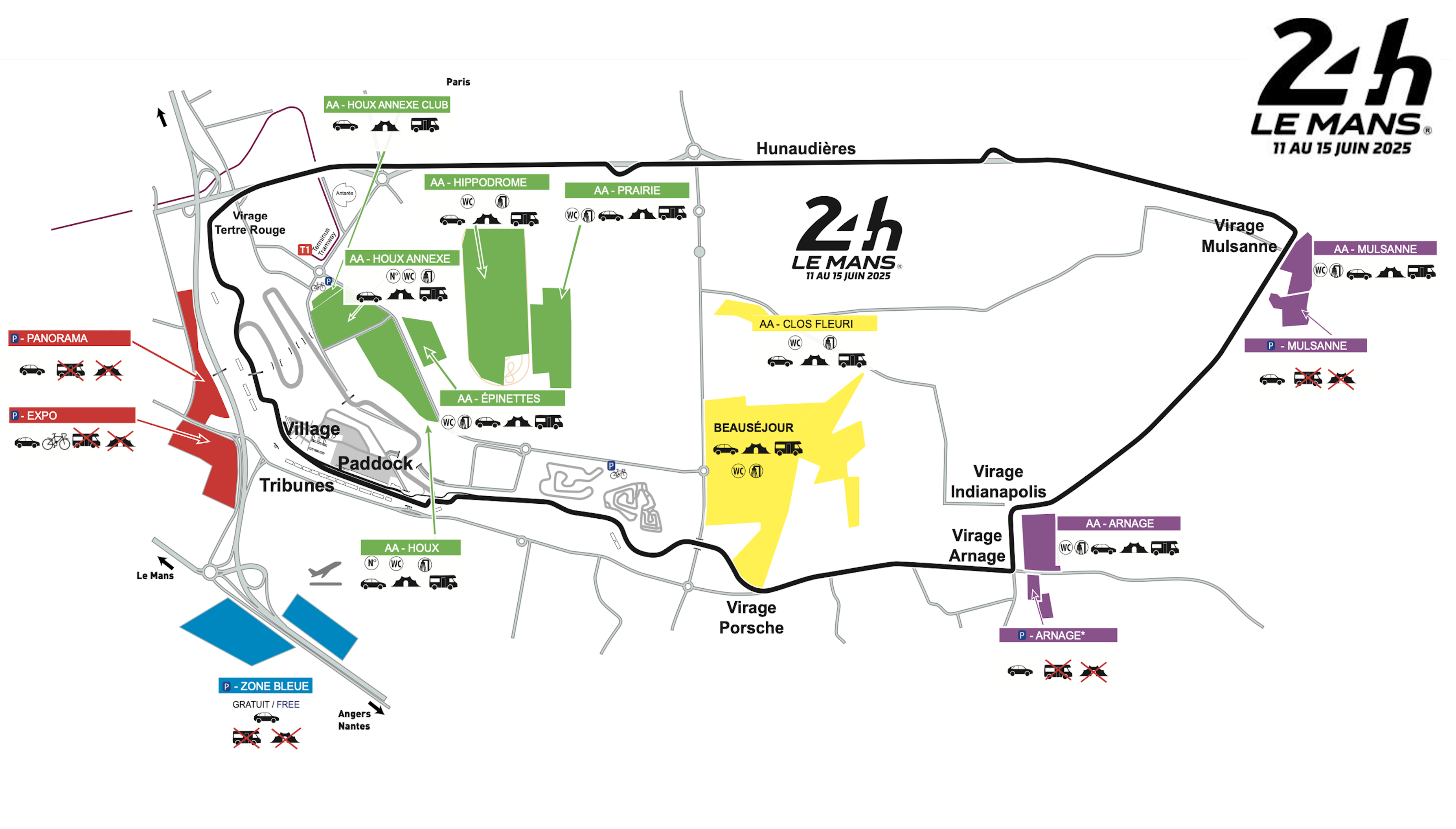
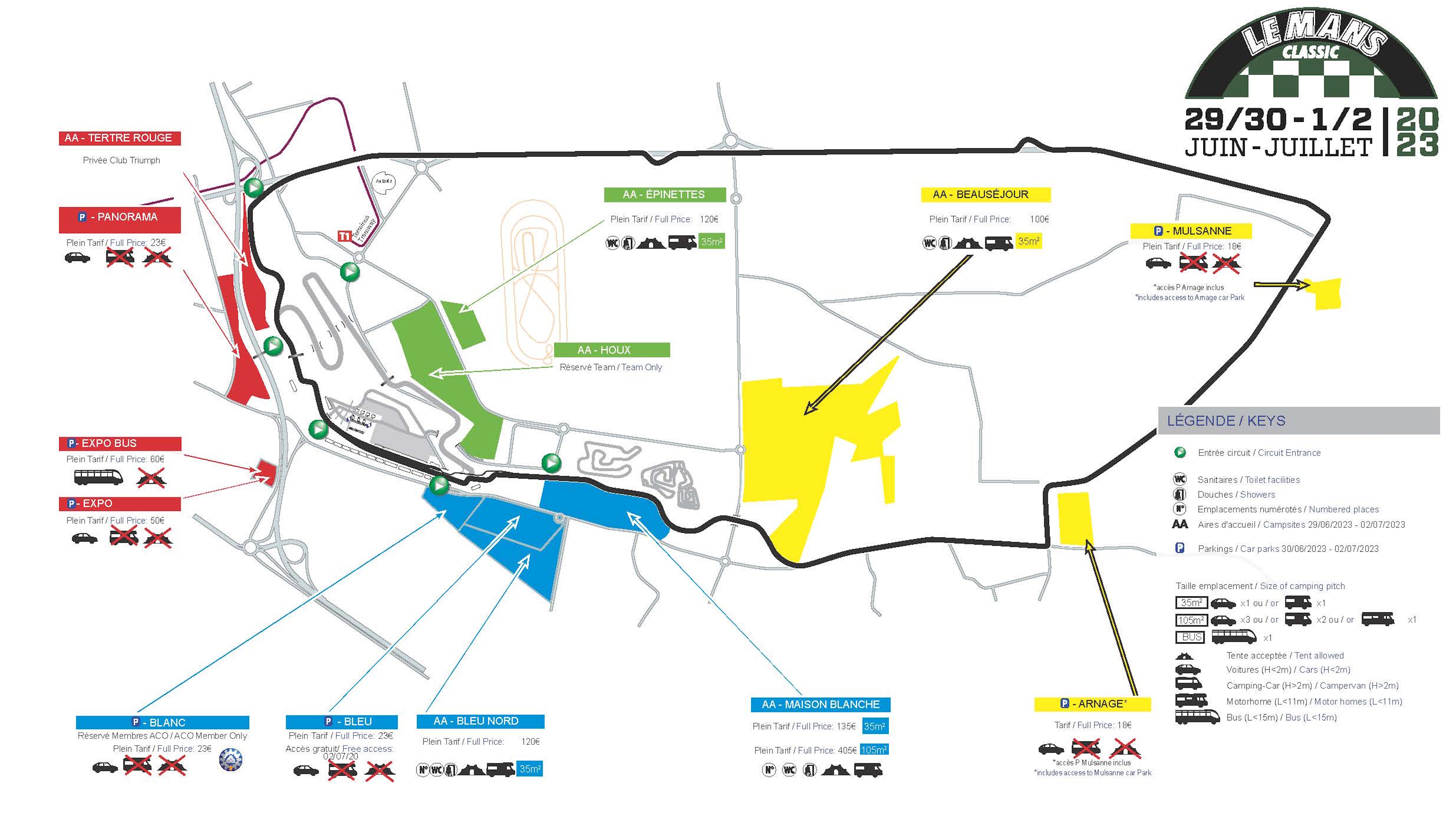
The Circuit de la Sarthe is located on the edge of the town of Le Mans, in Maine, westenr France. The nearest international airport is Tours Val de Loire Airport, around an hours drive to the south-east. Paris and its international airports is 150 miles to the north, approximately a 2.5 hours drive.
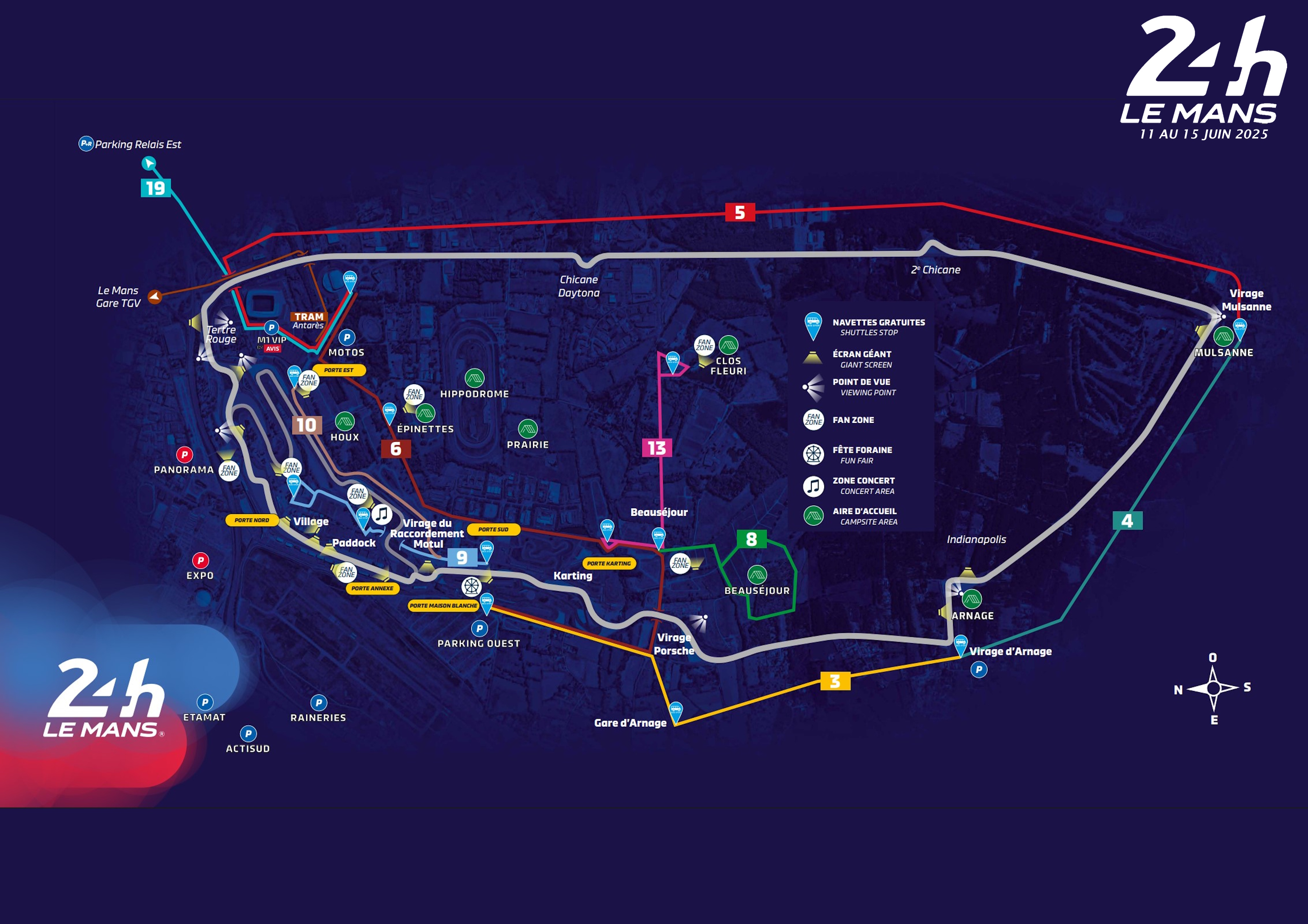
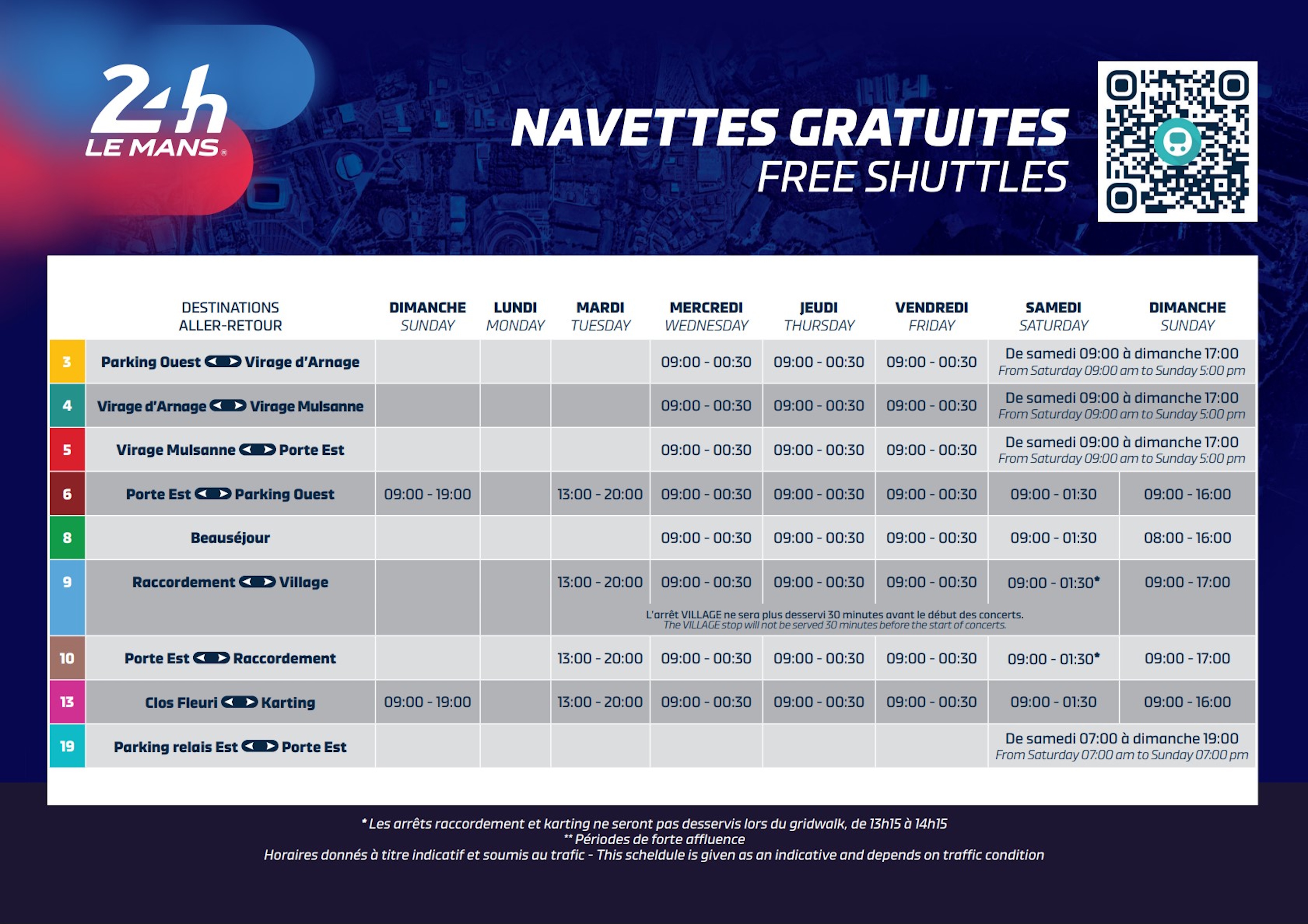
By Road is how most will travel to Le Mans. It is easily accessible via motorway from Calais, Caen, Le Havre, St Malo or Cherbourg if arriving from Britain by Ferry or Channel Tunnel. If travelling from elsewhere in France, the town is easily accessed via the E50, E402, E501 and E502 motorways. For those without a car (perhaps flying in to Paris from abroad) then it is possible to get to Le Mans either from Paris airport or Montparnasse station via the train. Once in Le Mans itself, travel to the circuit is easy thanks to the regular tram and bus services.
They have a person who works full time to help with 24 Heures matters.
Nadine BOUTTIER Office de Tourisme - Le Mans Tourisme & Congres Rue de L'Etoile - 72000 LE MANS T/02.43.28.12.69 nadine.bouttier@ville-lemans.fr
Under Construction.
Courtesy:Under Construction.
Courtesy: